
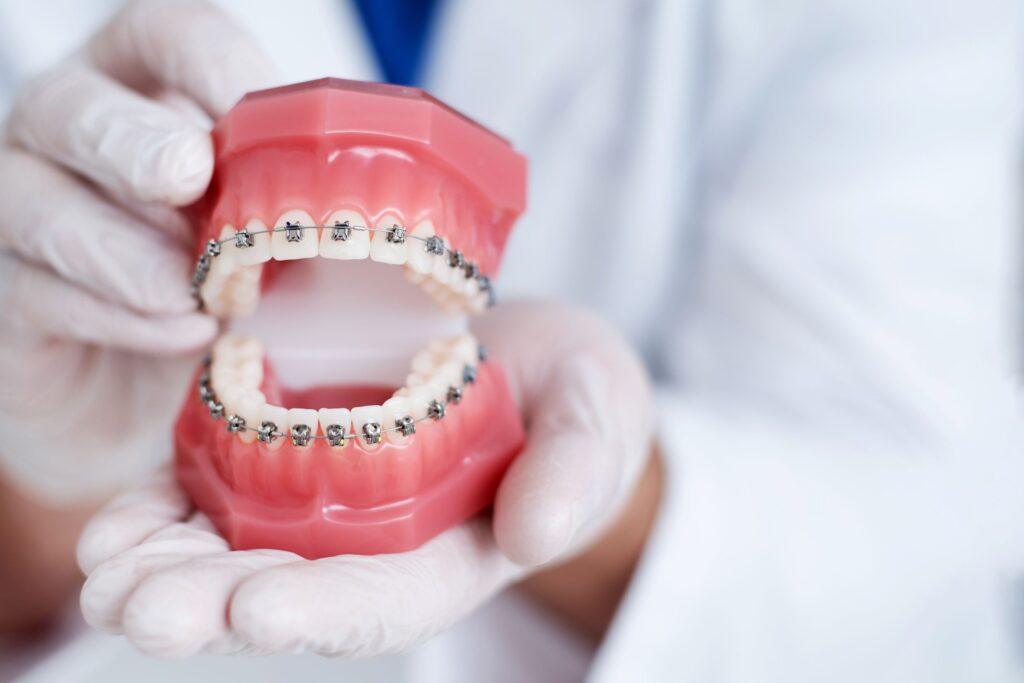
Traditional braces are the tried-and-true solution for straightening smiles and have a long history of success. However, it’s important to be well-informed before beginning this standard orthodontic service, and one thing on many patients’ minds is how long it usually takes to complete.
Most people finish treatment in 24 to 26 months, but your total timeline can depend significantly on your unique circumstances. Continue reading to learn about 3 things that can impact how long it takes to shift your teeth to their ideal places and how to avoid potential setbacks!
Factor #1: How Old You Are
Many patients undergo traditional orthodontics in their teen years because that’s when many experts recommend this service, but plenty of adults with overcrowded, gapped, or misaligned teeth also need braces.
Although it’s entirely possible to successfully straighten your smile later in life, it might take longer than it would have in your youth. This is because the jawbone is still growing during adolescence, meaning that teeth can be moved more easily during these years. Once you reach adulthood, they are more firmly rooted in your jaw, so it may take longer for them to travel to their ideal positions. As a result, children and teens may be more likely to complete braces in 18 to 24 months, compared to the 18 to 36 months often required for grown adults.
Factor #2: The Severity of Your Condition
The severity of your condition and the overall distance your teeth must move to reach their correct alignments can also significantly impact your treatment timeline for traditional braces. For example, those who have a mild gap between their two front teeth are likelier to achieve the intended outcome sooner than those with more severely crooked, torqued, or out-of-place teeth.
Furthermore, standard orthodontics is often the default service to address more severe bite misalignments, which may take longer to correct than a slightly uneven grin.
Factor #3: Whether You Comply With Instructions
Your orthodontist will likely provide special care instructions once you begin treatment to help you avoid damaging to the brackets and wires, which can result in relapse that can potentially add weeks to your total timeline.
For instance, it’s best to avoid overly hard, crunchy, or sticky foods that might snap a wire or dislodge a bracket, which releases the tension on the archwire that’s required to keep your teeth in their more updated positions.
If you’re considering braces but are unsure how long your treatment might take, you can learn more by scheduling a consultation with your orthodontist!
Meet the Author
Dr. Bart Miller has 20+ years of experience helping straighten the smiles of people of all ages to enhance their dental health. He earned his dental degree from the University of Texas Health Science Center in San Antonio, then completed an orthodontic residency at the Baylor College of Dentistry. Today, he uses state-of-the-art technology to offer a variety of services, including traditional braces, to address even the most complex cases. If you’d like to straighten your smile or have questions about this treatment, you can request an appointment on the website or call one of his conveniently located offices near you!