If you have braces, your orthodontist may eventually recommend wearing rubber bands, also known as orthodontic elastics. While the brackets and wires are responsible for gradually straightening your teeth, rubber bands serve a different but equally important purpose. More on that purpose below, along with tips for getting used to them!
Why Do You Have to Wear Rubber Bands with Braces?
Braces are designed to move individual teeth into their proper positions. However, having straight teeth doesn’t necessarily mean you have a properly aligned bite.
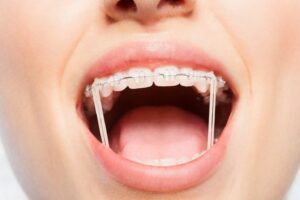
You may have an overbite, underbite, crossbite, or another orthodontic issue that requires additional correction. Rubber bands help address these problems by connecting specific brackets on your upper and lower teeth.
Depending on your bite, your orthodontist may recommend different elastic configurations. Some connect the upper and lower jaws to correct an overbite or underbite, while others help improve the alignment of individual teeth or sections of your bite.
Without the additional pressure from elastics, certain bite problems may take longer to correct or remain unresolved after your braces come off.
How Rubber Bands Work on Braces
Orthodontic rubber bands work by creating controlled tension between different areas of your mouth. When attached to designated brackets or hooks, they apply gentle, continuous force that encourages your teeth and supporting structures to move into better alignment.
Your orthodontist will determine where the bands should be placed based on your specific treatment needs. You may need to connect bands from your upper canine teeth to your lower molars, or use another configuration designed to correct your bite.
As your teeth gradually move, your orthodontist may adjust the placement or type of elastics to continue guiding your bite into the correct position.
4 Tips for Wearing Rubber Bands on Your Braces
Getting used to orthodontic elastics can be challenging, especially during the first few days. These tips can help make the experience easier.
Wear Them Exactly as Directed
Your orthodontist will tell you how many hours each day to wear your rubber bands. Some patients need to wear them nearly all day, removing them only for eating and brushing. Others may have different instructions. Following your prescribed schedule is essential for keeping treatment on track.
Replace Them Regularly
Rubber bands gradually lose their elasticity, meaning they become less effective at applying consistent pressure. Replace them according to your orthodontist’s instructions. Pro tip: Keep extra bands with you in case one breaks.
Learn the Proper Placement
Attaching rubber bands incorrectly can affect how your teeth move. Ask your orthodontist to demonstrate the correct placement and practice until you feel comfortable doing it yourself. Taking a picture of the correct configuration can also serve as a helpful reminder.
Don’t Double Up on Rubber Bands
You might assume wearing extra bands will make your teeth move faster; this can actually cause problems. Excessive pressure may damage teeth and surrounding tissues. Always use the number of elastics prescribed by your orthodontist.
Wearing rubber bands may seem like an inconvenience, but they play an important role in correcting your bite and achieving lasting orthodontic results. Follow your orthodontist’s instructions, maintain good oral hygiene, and attend your scheduled appointments to keep your treatment progressing as planned.
About the Author
For more than 2 decades, Dr. Bart Miller has helped patients of all ages achieve straighter, healthier smiles. After serving in the Navy, he graduated with honors from the University of Texas Health Science Center in San Antonio and completed his residency at the Baylor College of Dentistry. If you’d like to learn more about our services offered here at Rockwall Crossing Orthodontics, contact us online or call our Rockwall location at (972) 771-1117 or our Canton office at (972) 771-1117.